
An interview with Dr. Meriton Ceka, Professor at the University of St.Gallen & CEO of Delta Lektorat
Interview conducted by Dea Elmasllari, MSc, Senior Researcher & Head of Partnerships at Delta Lektorat
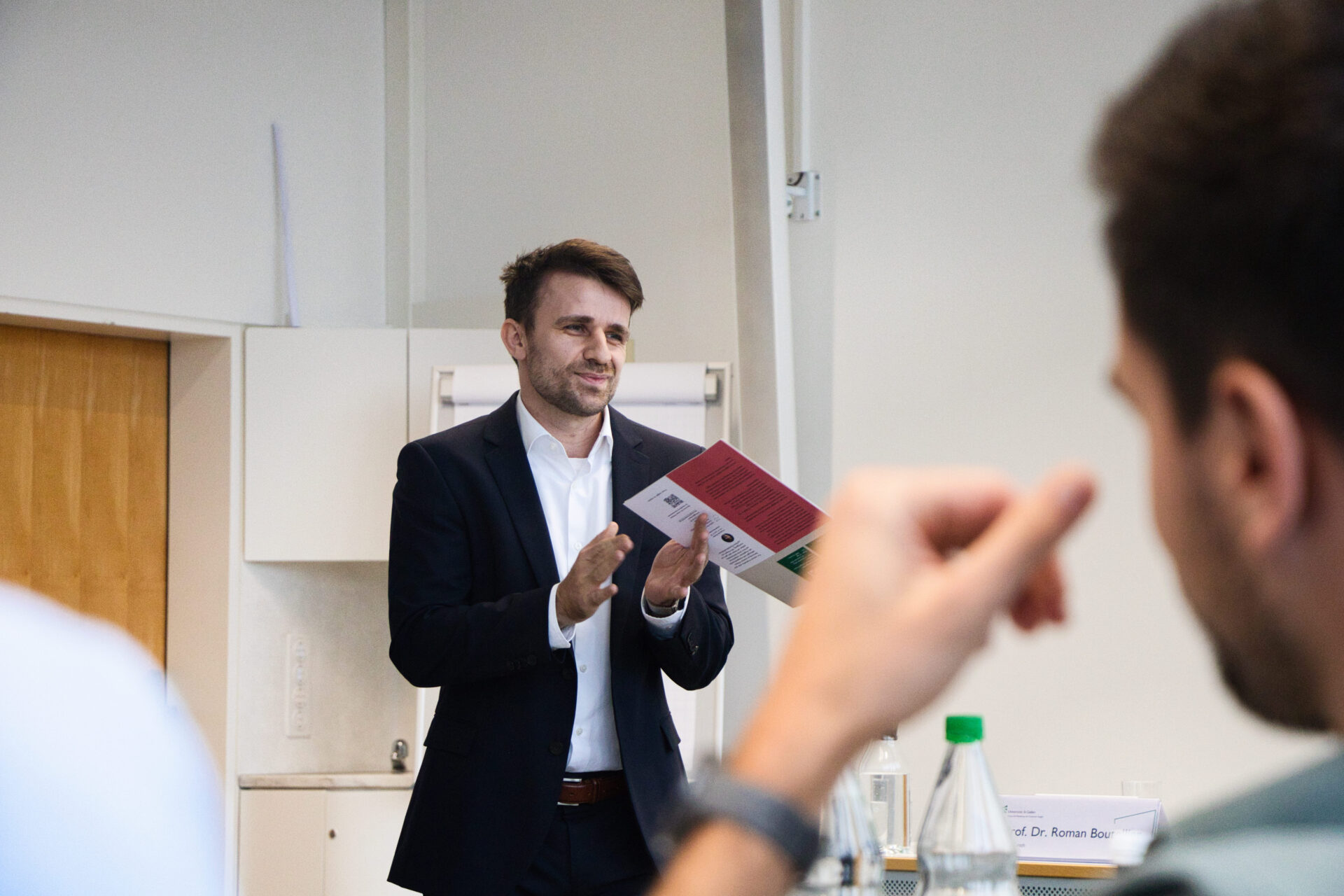
It’s a perspective few people have: grading theses in the morning, editing them in the afternoon. Dr. Meriton Ceka has spent six years as a professor at the University of St.Gallen and at the University of Applied Sciences of the Grisons, where he teaches marketing management and sports management. In this role, he has supervised students in their research projects and evaluated hundreds of academic papers. In addition, he has been leading Delta Lektorat, Switzerland’s leading academic proofreading and coaching company.
In this unique position, standing at the intersection of academic standards and student reality, Dr. Ceka has witnessed firsthand how AI is reshaping academic writing, for better and worse.
What gives him an edge, beyond the hundreds of papers he’s evaluated or guided, is his bird’s-eye view of how academic standards collide with the digital tools students now rely on. We sat down to discuss what professors really look for when grading, where AI tools fall short, and what students need to produce exceptional work.
In this interview:
Table of Contents
The AI Revolution: What’s Really Happening in Academic Writing
Dea: You’re both grading student work and editing it professionally. How has AI changed what you see on both sides of your desk?
Meriton: AI has mainly changed students’ habits and educators’ expectations. Honestly, it’s been fascinating to observe this from both sides of my desk. Students now draft their work much faster, but here’s the problem: they often understand their own text less deeply. Educators, on the other hand, have become almost paranoid about inconsistencies. Strong writing paired with weak reasoning? That immediately raises a red flag. What I see on both sides is this: AI hasn’t replaced the writing process; it has shifted the workload. Students spend less time on actual writing, but much more time explaining, justifying, and defending the AI-generated content, a process that requires human thinking and critical reflection. Clarity of thought has become more important than ever.
Dea: What are the easiest signs to spot that a student has over-relied on AI?
Meriton: The simplest signs are inconsistencies. The text looks polished, but the reasoning is very weak. Another sign is sudden style changes: one paragraph sounds sophisticated, the next very simple. I also see many vague statements without citations or concrete examples. AI-detection tools give warning signals, but their accuracy isn’t where it should be, yet (laughs). What I also notice, and my colleagues confirm this, is that when we ask follow-up questions, students who rely too heavily on AI often freeze. They can’t explain their own text. That is usually the clearest indicator.
Dea: Where does AI help students, and where does it hurt them?
Meriton: AI helps students get started faster. It can organise ideas, suggest structures, and clean up language, all of which takes a lot of pressure off. That part is genuinely helpful. But here's where it becomes a problem: when students let the tool think for them. Many skip the analytical work entirely and end up with texts that sound polished but have no real depth. In the end, AI is just a support tool. It's not a replacement for where real understanding gets built.
AI didn't replace the writing process; it simply shifted the workload. Students spend less time writing and more time explaining, justifying, and defending what the AI helped them produce.

Inside the Professor’s Mind: What Really Matters When Grading
Dea: What distinguishes a technically correct thesis from one that comes alive through original thinking?
Meriton: A technically correct thesis follows the rules. An original thesis shows that the student thought about the topic and engaged with it critically. You see it in the way they review the literature, question assumptions, connect ideas, and choose examples that genuinely support their argument. Original thinking does not mean inventing something new. It means having a point of view, applying logic, and demonstrating curiosity. That is what makes a thesis feel alive instead of just assembled. In the end, this shift from reproducing information to developing an argument is what allows students to move from writing a paper to making a genuine academic contribution.
Dea: What’s the mindset shift students need to make to go from “writing a paper” to “making an academic contribution”?
Meriton: Students need to stop seeing a thesis as a task to finish and start seeing it as a problem to explore. That's the shift that changes everything. It happens when they move from just summarising what others have said to engaging with literature in a way that adds something meaningful. That means identifying a clear research gap, making a theoretical contribution by linking their insights to existing concepts, and showing why their findings matter in practice.
Dea: What part of the thesis writing process do students underestimate the most?
Meriton: Most students underestimate how much time real thinking takes. They focus on writing the text, but the hardest part… (pauses to think) is everything that happened before. Defining a precise research question. Understanding literature. Identifying the gap. Building a logical framework. They also don't realise how often they need to revise their structure once they start analysing their findings. That's where things get messy, and that's normal. In the end, the quality of a thesis isn't determined by how fast you write. It's determined by how solid your foundation is.
Original thinking doesn't mean inventing something new. It means having a point of view, applying logic, and demonstrating curiosity. That's what makes a thesis feel alive instead of just assembled.

The Coach and Proofreader Perspective: What Students Don’t See
Dea: What’s the most common issue you fix that students don’t even realise is a problem?
Meriton: The most common problem is unclear logic. Many students think they have a writing problem, but it’s really a thinking problem. In my coaching, I guide them to recognise this for themselves. I ask targeted questions, point out where definitions are missing, and show them where the research question doesn’t align with the analysis. And when they recognise these gaps on their own (smiles), everything starts to fall into place. Everything becomes more coherent. The goal isn’t just to improve the text: it’s to help them understand how a strong academic argument is structured.
Dea: When is the right time for a student to get support from an expert coach or proofreader?
Meriton: It’s important to distinguish between coaching and proofreading. They serve totally different purposes at different times. Coaching is most effective at the beginning of the thesis. This is where students need support in defining a research question, structuring their framework, and understanding the logic of academic work. Proofreading, on the other hand, comes much later. The right time for a proofreader is when the content is complete and the argument is stable, but the student needs help with clarity, style, and consistency. In my experience, the best theses are always those that combine both. Strong coaching at the start. Thorough proofreading at the end. That's the formula.
Many students think they have a writing problem, but it's a thinking problem. Once they see these gaps on their own, everything becomes more coherent.

The Future: Where Academic Support Is Heading
Dea: How are proofreading services evolving with AI, and what will students need in the next 5 years?
Meriton: Proofreading is moving away from fixing sentences and toward strengthening thinking. And honestly, that's the real shift happening right now. As AI takes over basic grammar and phrasing, students need something completely different: feedback on structure, logic, and academic reasoning. In the coming years, real value won't be in polishing words. It'll help students understand their topic more deeply, interpret sources correctly, and coherently connect their ideas. This is why proofreading is becoming a mix of feedback, coaching, and guidance.
Dea: What role will human expertise continue to play in an AI-driven academic world?
Meriton: Human expertise will remain essential, period. Academic work is more than producing text. It requires judgment, interpretation, and understanding of context. AI can summarise, rephrase, and organise information, but it can’t evaluate relevance, question assumptions, or recognise subtle inconsistencies. Experts guide students in making sense of their ideas, building solid arguments, and understanding what truly matters in their field. In an AI-driven world, human expertise becomes the quality filter that ensures depth, accuracy, and integrity.
Dea: But the big question is: Will students even write their own papers in the future?
Meriton: Absolutely, students will still write their own papers. But the way they do it will change dramatically. AI will take over a larger portion of the routine writing, and universities will place greater weight on what students can explain and defend in person. Presentations and thesis defenses will become more important because that is where real understanding becomes visible. We ask ourselves this question at universities as well, and the answer is clear: empirical work will gain relevance, since data collection, analysis, and interpretation can’t simply be outsourced to AI. In the end, the value of a thesis will be measured less by how it is written and more by the thinking, evidence, and judgment behind it.
AI can summarise, rephrase, and organise information, but it can't evaluate relevance, question assumptions, or recognise subtle inconsistencies. Human expertise becomes the quality filter that ensures depth, accuracy, and integrity.
Conclusion
After speaking with Dr. Ceka, one thing becomes clear: AI is a tool, not a shortcut – and the students who will thrive are those who use it to enhance their thinking, not replace it. As he told us during the interview, “The value of a thesis is measured less by how it is written and more by the thinking, evidence, and judgement behind it”.
For students today, this means that AI has raised the bar for writing quality. Educators now place greater emphasis on everything beyond the text itself. Success will not go to those with access to the best tools, but to those who think critically, can defend their ideas, and understand their work well enough to explain it in their own words at any time.
The rules of the game have changed. Outstanding academic work today often comes from knowing when and how to use AI tools effectively. In other cases, it requires targeted human expertise to take your work from good to exceptional.
Ready to take your thesis to the next level? Book a coaching call with Dr. Meriton Ceka at Delta Lektorat.
For more inspiration or resources, visit our blog page.
Frequently Asked Questions (FAQs)
No. While AI can help with brainstorming, language refinement, and structure, it cannot replace critical thinking, original analysis, or the nuanced understanding required for academic research. Human judgment is essential.
Use AI for idea generation, drafting outlines, or polishing language, but always review, fact-check, and infuse your own insights. AI should be a tool, not the author.
Early for coaching, late for proofreading. Coaching helps with structuring and argumentation. Proofreading works best when the content is complete and there is still time to revise.
Over-reliance, failing to critically evaluate AI suggestions, and neglecting originality. Professors can usually spot AI-generated content if it lacks personal voice or deep understanding.
Absolutely. AI can assist, but human experts provide nuanced feedback, ethical guidance, and the critical thinking skills AI cannot replicate.

Dea Elmasllari, MSc.
Dea is a senior researcher passionate about helping students navigate the world of academia. She explores the intersection of AI and scholarly work, offering insights on how technology can enhance writing, research, and learning. As the Head of Partnerships at Delta Lektorat, Dea leads collaborations with universities and student associations to promote excellence in academic writing and innovative approaches to thesis support. Her work focuses on bridging traditional academic rigour with emerging digital tools that empower students and scholars alike.
Share: